Radios
For many use cases, a Base/Rover setup is not needed. Most users will utilize a corrections service and obtain corrections over an NTRIP Client inside a GIS app. This section is for users who prefer or must use a base to transmit corrections to a rover.
The Transport Methods section covers how the different methods work, this section goes into the specifics about each radio and how it is configured.
ESP-NOW
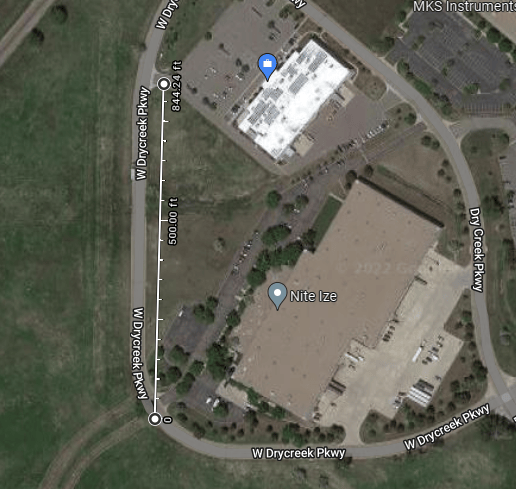
The FPL has a built in 100mW radio that uses 2.4GHz and is capable of transmitting/receiving RTCM from a single base to multiple rovers. The range is not great, but it's free!
ESP-NOW is a 2.4GHz protocol that is built into the internal ESP32 microcontroller; the same microcontroller that provides Bluetooth and WiFi. ESP-NOW is most useful for connecting a Base to Rover (or multiple Rovers) without the need for an external radio. Simply turn two SparkFun RTK products on, enable their radios, and data will be passed between units. Additionally, ESP-NOW supports point-to-multipoint transmissions. This means a Base can transmit to multiple Rovers simultaneously.
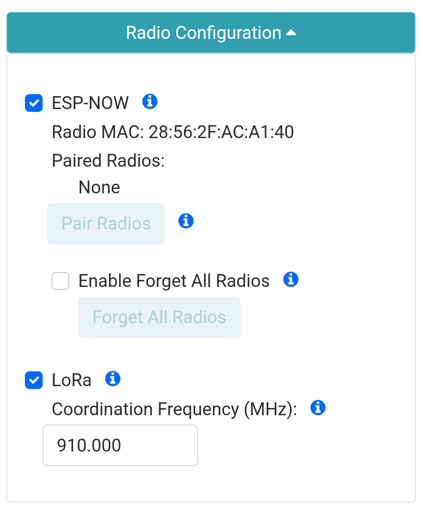
Enable the ESP-NOW radio on the configuration page by opening the Radio menu and enabling ESP-NOW. No further configuration is required. No external antenna is required.
ESP-NOW is a radio included in every SparkPNT product and works well, but it has a few limitations:
- Limited range. You can expect two RTK devices to be able to communicate approximately 250m (845 ft) line of sight but any trees, buildings, or objects between the Base and Rover will degrade reception. This range is useful for many applications but may not be acceptable for some applications. We recommend using ESP-NOW as a quick, free, and easy way to get started with Base/Rover setups. If your application needs longer RF distances consider cellular NTRIP, WiFi NTRIP, LoRa, or an external serial telemetry radio.
- ESP-NOW can co-exist with Bluetooth but reception using Bluetooth SPP (aka Bluetooth Classic) is limited. When a user is connected over Bluetooth to the FPL while simultaneously running ESP-NOW, a fraction of incoming ESP-NOW data will be lost due to conflicts with Bluetooth. The best solution is to connect to the FPL over BLE.
- ESP-NOW can co-exist with WiFi, but both the receiver and transmitter must be on the same WiFi channel. This is usually only a problem if the Base is also connecting to WiFi to run an NTRIP Server. If problems arise, it is recommended to disable features on the base and rover that require WiFi (NTRIP, TCP, etc.).
By default, the ESP-NOW radios use the broadcast address to transmit all data from the base to any rovers in the area that also have their ESP-NOW radio enabled. If multiple teams are operating in the area, a base and and any number of rovers can be paired so that only those devices can hear each other.
LoRa
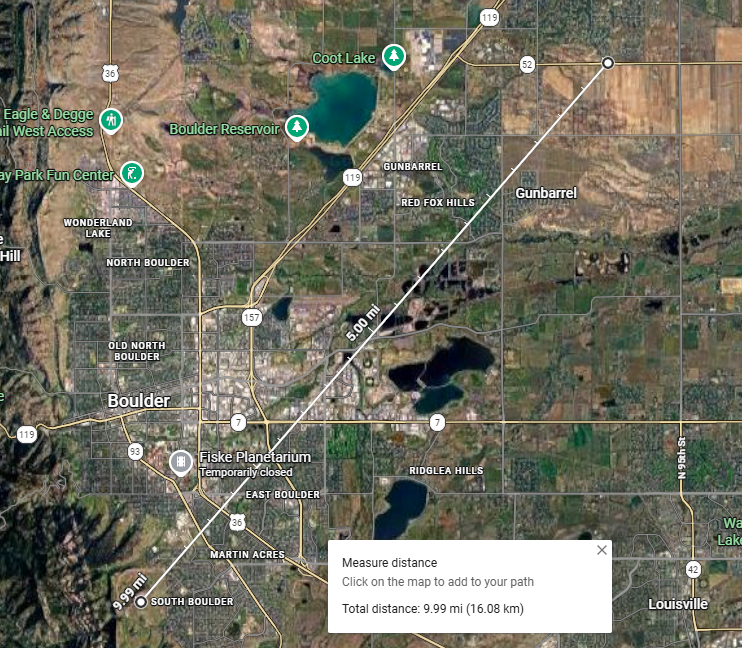
The FPL contains a powerful 1 watt long range (LoRa) radio capable of nearly 10 miles of line-of-sight range.
Enable the LoRa radio on the configuration page by opening the Radio menu and enabling LoRa. No further configuration is required.
Coordination Frequency - This frequency is used by both rover and base radios to coordinate the frequencies that they will hop to during data transmission. Any rover will be able to hear any base with the same coordination frequency. If there are multiple teams operating in the same vicinity, set the base/rovers of the teams to different coordination frequencies so that they do not interfere with each other.
As more satellites are seen, more correction data is generated by the base GNSS receiver. Lowering the messages transmitted by using the Reset to Low Bandwidth Link button on the Configuration page can reduce traffic on the LoRa link and increase reliability.
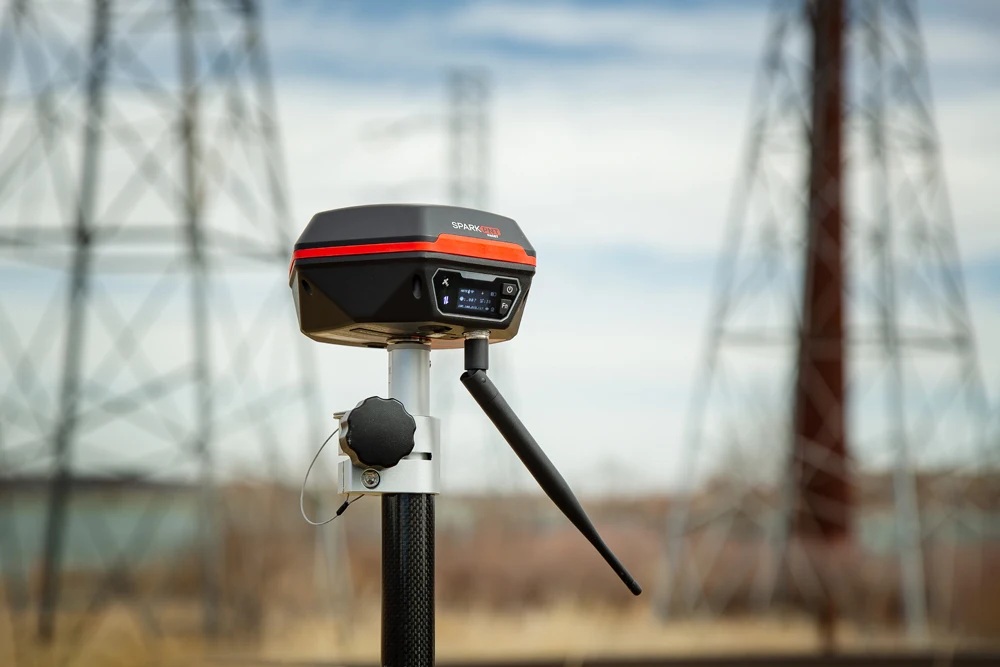
The included 915MHz antenna must be attached to the FPL for transmission or reception.
Known limitations:
- The LoRa radio operates frequencies 902MHz to 928MHz. No HAM radio license is needed to legally operate this device in the United States. Please check your local laws to confirm 915MHz frequency radios are allowed.
- The LoRa radio is powerful, but it is not magic. The usable range is quite large compared to ESP-NOW or other 100mW packet radios, but it is impossible to predict how the FPL's LoRa radio will perform in a given environment. Dense materials including concrete, hills, earth berms, and water will block the signal.